

Introduction:
Japanese Architecture Essay Shadow Toilet! Quietness, simplicity, natural materials, obscurity, and carefully regulated light are frequently found to be beautiful in Japanese design. The traditional toilet is one of the most intriguing instances covered in Japanese architecture literature.
Japanese author Jun’ichirō Tanizaki’s well-known essay In Praise of Shadows helped popularise this concept. Tanizaki examines how Japanese culture values fine details, old materials, soft light, and shadows in the essay.
Learn how Japanese shadows transform a typical lavatory into a serene area for contemplation, beauty, and the natural world.
Table of Contents
What Was the Development of Japanese Shadow Design – Learn More!
The concepts of simplicity, nature, balance, and restraint served as the foundation for traditional Japanese architecture. Instead of totally isolating humans from the natural world, buildings were frequently made to blend in with their environment.
In this strategy, light was crucial. Not all shadows were eliminated by architects. Alternatively, shadows might be incorporated into the visual experience.
Instead of focusing on ostentatious ornamentation, this way of thought produced an architectural language centred on minor adjustments.
Why Do Shadows Matter in Japan?
Architectural environments might feel quieter and more profound when shadows are present. Soft darkness lets the eye gradually pick up details rather than revealing every surface.
Shadows can also draw attention to texture in traditional Japanese interior design. When natural materials like wood, paper, stone, bamboo, and others are shielded from intense light, they can appear more lovely.
What Function Does Natural Light Serve?
Throughout the day, natural light varies. This shift is frequently included into the design of Japanese buildings.
While afternoon light can produce more pronounced patterns, morning light may be cooler and softer. Shadows grow warmer and longer at dusk.
As a result, the building feels slightly different every hour.
How Do Roofs Cast Shadows?
Broad overhangs are a common feature of traditional Japanese roofs. These overhangs regulate the quantity of sunlight that enters the structure while simultaneously shielding walls and openings from the elements.
A shift between inside shade and outdoor brightness is the end consequence.
Why Does Simplicity Matter So Much?
Japanese design frequently steers clear of superfluous visual clutter. It doesn’t take many decorations to make a space feel lovely.
Rather, proportion, material, texture, light, and empty space can all contribute to beauty.
What Role Does Nature Play in the Design?
Open views, gardens, trees, rocks, and water can all be included into the architectural experience.
When talking about the traditional Japanese toilet that is depicted in In Praise of Shadows, this relationship with nature is very significant.
The Japanese Toilet in Shadow Essay: What Is It – Learn More!
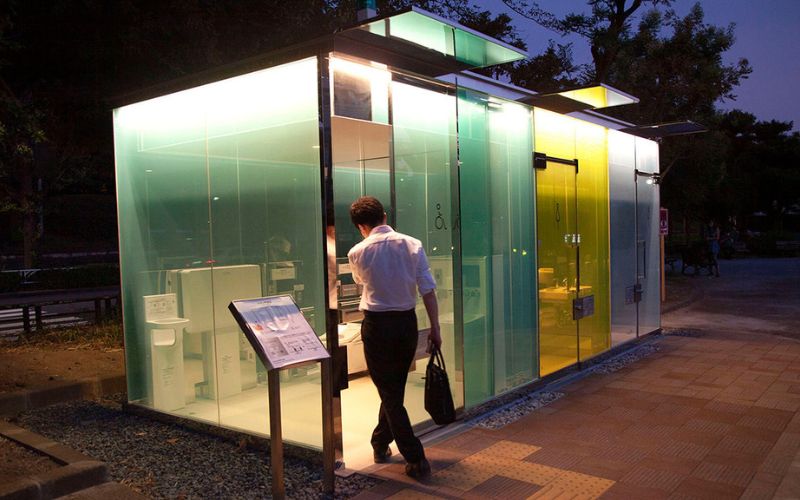
Tanizaki contrasts various architectural, interior, lighting, material, and daily object approaches. He describes how muted light and darkness can be used to produce beauty in traditional Japanese environments.
His explanation of the toilet is particularly intriguing since he goes beyond characterising it as only a sanitary facility. Rather, he portrays the conventional loo as a serene architectural setting.
According to his account, the loo is attached to a garden-like environment and kept apart from the main building. Privacy and seclusion from the busy areas of the house are created by this division.
The modern bathroom, which is typically decorated with bright lights, clean surfaces, mirrors, and very visible equipment, is a very different experience.
Tanizaki’s argument goes beyond just saying that outdated restrooms are superior. Instead, the illustration clarifies a more general Japanese aesthetic concept: quiet, flawed, subtle, and shadowed spaces can be beautiful.
How Is Nature Reflected in the Conventional Toilet – Discover Nature!
The traditional Japanese toilet’s connection to the surrounding natural environment is one of its best qualities, according to Tanizaki.
The toilet is envisioned as being situated away from the main living area, occasionally in the middle of a garden or among trees. This place evokes a sense of tranquillity and seclusion.
The person transitions from the house to nature in a more subdued manner rather than walking into a brilliantly lit area with artificial surfaces.
There are various architectural concepts that help explain this relationship.
How Is Privacy Created by Separation?
Physical and psychological distance are produced by a different place.
The bathroom is no longer just another room in the house. Because of its location, the individual can take a break from everyday domestic tasks and enjoy some privacy.
Why Do Gardens Matter?
A garden offers shifting hues, sounds, textures, and illumination.
Sunlight travels through trees, birds make natural noises, and leaves move with the wind. The room might feel more connected to the outer world with these minor adjustments.
What Impact Does Wood Have on the Ambiance?
Wood seems cosy and organic. As it ages, its texture changes, and its surface may appear richer in soft lighting.
This contrasts greatly with highly polished contemporary materials that are intended to appear spotless and vibrant.
What Is Added by Quietness?
A person’s perception of architecture can be altered by quiet.
Little things stand out when there is less background noise and visual distraction. The experience may include the sound of footfall, water, wind, or leaves.
Why Is Distance Important?
A brief journey may be created by the distance from the main building.
Entering a different room is not the same as walking toward a different building. Movement, seclusion, and the surrounding environment are all linked to architecture.
How Are Shadows Used in Tanizaki’s Architecture – View the Shadows!
Tanizaki’s central claim in In Praise of Shadows has to do with appreciating subtle gloom.
Tanizaki questioned if greater brightness always equates to greater beauty, even when modern technology made it feasible to make brighter environments.
Indirect and filtered light are common in traditional Japanese rooms. Light may enter through gaps, windows, screens, or apertures rather than illuminating everything uniformly.
Areas of light and dark are produced as a result.
Because the atmosphere of the traditional toilet depends on this interaction, it becomes a potent example.
Why Is Soft Darkness Appealing?
Certain aspects are shown while others are concealed by soft shadows.
This makes things mysterious. The room may seem deeper since the eye does not instantly take in every visual feature.
How Are Materials Affected by Shadow?
Depending on the illumination, materials might appear differently.
Wood could seem warmer. Paper might shine faintly. Stone has the ability to be more dramatic. When a portion of a plain surface fades into shadow, it might acquire optical depth.
Why Isn’t Brightness Always Better?
Many contemporary activities benefit from bright illumination, particularly those where cleanliness and visibility are crucial.
But brightness can also eliminate minute surface variations.
Therefore, Tanizaki’s aesthetic argument is not truly about always choosing darkness over light. It’s about realising that shadows can have emotional and visual significance.
How Is Calm Produced by Shadow?
Visual excitement may be diminished in a poorly lit setting.
The mind may perceive a room as slower and quieter when there are less dazzling surfaces vying for attention.
Why Is Imperfection Important?
Age, wear, texture, and inherent irregularity are frequently valued in traditional Japanese aesthetics.
Instead of obscuring certain characteristics, shadows can highlight them.
What Constitutes Japanese Shadow Architecture – Examine Resources!
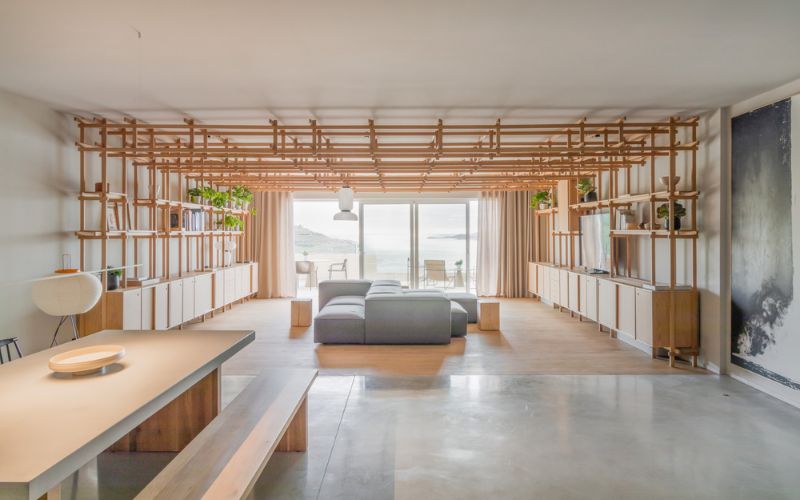
Natural materials including wood, bamboo, paper, stone, clay, and other locally accessible materials are frequently used in traditional interiors.
Both direct and indirect light interact exquisitely with these materials.
Wood has the ability to both absorb and soften light. Sunlight can be dispersed using paper screens. Stone can offer a calm, steady visual component. Bamboo may add rhythm and texture.
Therefore, rather than being viewed as a stand-alone architectural item, the traditional toilet discussed in Tanizaki’s article can be regarded as a component of a larger material culture.
What Makes Wood Typical?
For generations, wood has played a significant role in Japanese architecture.
It has noticeable texture and can create cosy homes. The building’s exterior may alter as it ages, lending it a historical feel.
How Is Light Softened by Paper?
Instead of letting bright, direct light into a space, traditional paper screens can filter sunlight.
This produces a gentle transition between inside shade and outdoor brightness.
Why Is Stone Used?
Stone may provide visual weight and a natural texture.
Stone also establishes a link between structures and landscapes in gardens and walkways.
How Is Texture Added by Bamboo?
Bamboo has a unique appearance, is natural, and is lightweight.
Its texture and lines can produce delicate patterns without needing a lot of embellishment.
What Makes Natural Materials Vital?
The notion that architecture should adapt to its surroundings is supported by natural materials.
The building feels less manufactured and more rooted in time and nature as a result of their shifting look.
What Distinguishes Modern Bathrooms From Shadow Toilets – Evaluate Designs!
Tanizaki’s description of a traditional Japanese toilet differs greatly from many modern toilets.
Hygiene, convenience, accessibility, lighting, plumbing, ventilation, and effective use of space are typically the main priorities of modern bathrooms. These characteristics are crucial.
On the other hand, the classic example is mostly being examined from an aesthetic standpoint.
Bright LED lights, reflecting tiles, glass, metal, white fixtures and automated systems can all be found in a contemporary bathroom.
A very distinct experience—quietness, natural surroundings, soft light, and privacy—is emphasised by the typical shadow-oriented setting.
Readers can better comprehend Tanizaki’s main point because to this contrast.
He was curious about how contemporary technologies might alter the aesthetic and emotional aspects of conventional settings.
What Can Japanese Architecture Teach Us About Modern Homes – Put Ideas to Use!
These architectural concepts can be used by contemporary homeowners without having to construct a traditional Japanese toilet.
There are easy ways to modify the philosophy.
Controlled lighting, natural materials, and visual simplicity can be beneficial in a bathroom, bedroom, reading nook, corridor, or garden.
For instance, a residence can incorporate layered lighting with softer sources for relaxed areas rather than utilising highly bright lighting everywhere.
A quieter atmosphere can also be produced by using natural wood, stone, plants, textured walls, and basic furnishings.
The objective is not to precisely replicate Japanese architecture from the past. Understanding the underlying premise is the aim.
How Can a Japanese Shadow-Inspired Space Be Made – Improve Your Design!
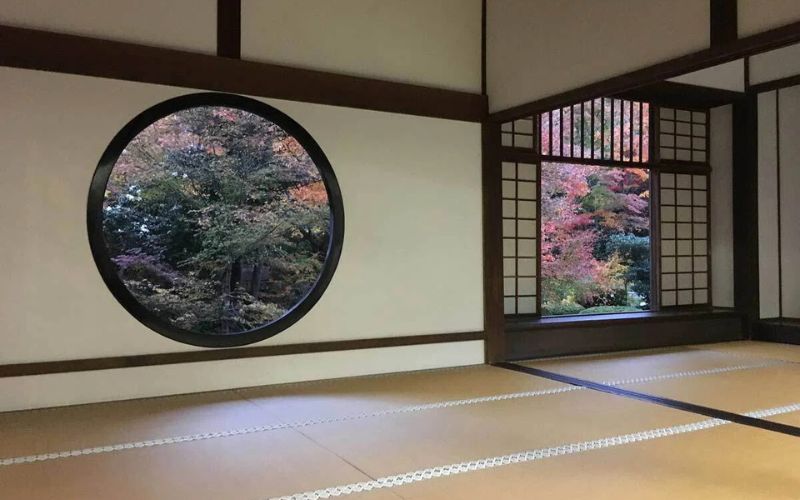
It is possible to create a shadow-inspired interior without spending a lot of money on construction.
Consider light first. In what part of the room does sunlight enter? Which surfaces are exposed to direct light? Which regions might continue to be gently shaded?
Next, think about the materials.
Warmth can be added by natural wood, textured pottery, stone, bamboo, linen, and other organic materials.
Lastly, cut back on superfluous adornment.
Every item in a room should have a purpose, but it doesn’t have to be empty to be serene.
How Can Soft Lighting Be Used?
Instead than depending solely on one very bright ceiling light, select several low-intensity light sources.
Layers can be produced by wall lights, table lamps, hidden lighting, and warm ambient sources.
Why Include Natural Textures?
Natural textures add visual interest to a room without the need for elaborate décor.
Subtle details can be seen in wood grain, stone surfaces, woven textiles, and handcrafted ceramics.
How Can the Space Be Improved by Plants?
Natural colour and movement are brought indoors by plants.
The garden or outdoor landscape can be connected to the interior with a simple plant placed next to a window.
Why Cut Down on Visual Clutter?
A room may feel crowded if there are too many items in it.
Organising surfaces makes architectural features, materials, and light more apparent.
How Can a Quiet Corner Be Made?
The same basic concept of retreat can be found in a window seat, a quiet reading corner, or a meditation spot.
The area doesn’t have to be very big. Its goal is to separate oneself from daily activities.
What Does In Praise of Shadows Teach Us – Acquire Knowledge!
Depth can be produced via shadows. Character can be developed via ageing. Warmth can be produced by natural materials. Peace can be achieved through silence. Important items might have greater meaning when there is empty space.
Because it takes an ordinary practical room and displays a different way of thinking about architecture, the traditional Japanese toilet becomes unforgettable.
It serves as a reminder that architecture encompasses more than just walls, doors, plumbing, furniture, and electronics.
It also has to do with how someone feels when they go through an area.
Why Is the Japanese Toilet Important for Architecture – Contemplate Further!
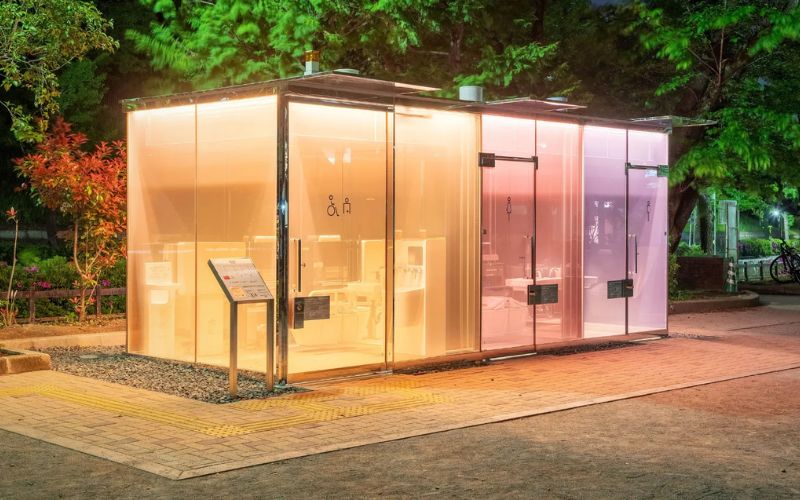
The toilet example is significant because it demonstrates how architectural philosophy may be found in commonplace settings.
When studying Japanese architecture, people frequently look at well-known temples, homes, gardens, and museums.
Tanizaki instead focuses on a typical institution.
His debate is powerful because of this.
Ideas of privacy, nature, light, shadow, materials, distance, and mood may all be illustrated with a tiny toilet.
The lesson is that costly embellishment is not always necessary for good construction.
Simple choices concerning location, light, material, and proportion may sometimes result in the most memorable places.
How Can Today Be Inspired by Shadow Architecture – Find Inspiration!
Modern technology and traditional Japanese concepts can coexist in contemporary architecture.
It is possible to use mild illumination in a modern home with smart lighting. It can retain natural materials while having sophisticated plumbing. It can create shaded spaces, reduce glare, and make advantage of enormous windows.
Tradition and technology don’t always have to compete, as this combo demonstrates.
Alternatively, designers can modify the idea from classic building to suit contemporary requirements.
What Are the Crucial Points to Keep in Mind – Keep in Mind More!
There are a few basic concepts that help explain the Japanese architecture essay shadow toilet topic.
- Shadow: Shadows can create ambiance and depth.
- Nature: Gardens and landscapes can continue to be tied to buildings.
- Privacy: Distinct areas might offer a sense of psychological separation.
- Materials: Natural texture is produced by wood, paper, stone, and bamboo.
- Simplicity: Important elements can be strengthened with less ornamentation.
- Quietness: A quieter atmosphere might enhance the sense of retreat.
- Light: Various moods can be created with controlled light.
- Time: As natural materials age, they may become more fascinating.
These concepts contribute to the explanation of Tanizaki’s discussion’s continued appeal to scholars of architecture, interior design, Japanese culture, and aesthetics.
FAQs!
What Does Japanese Architecture’s Shadow Toilet Mean?
Tanizaki’s description of a traditional Japanese toilet in In Praise of Shadows is referred to as the “shadow toilet.” It stands for seclusion, the natural world, gentle light, and the beauty of shadows.
The Japanese Toilet: Who Wrote About It?
In his article In Praise of Shadows, Japanese author Jun’ichirō Tanizaki talked about the traditional Japanese toilet. He utilised it to elucidate more general concepts about the appreciation of darkness and Japanese beauty.
Why Do Shadows Matter in Japanese Design?
Because they can produce depth, softness, mystery, and tranquillity, shadows are significant. Instead of attempting to make every surface equally bright, traditional Japanese design frequently makes use of indirect light.
Is the Conventional Japanese Toilet Still Used?
In contemporary Japanese households, traditional toilet designs are not the norm. Modern bathrooms typically prioritise accessibility, modern comfort, plumbing technology, convenience, and hygiene.
What Can Tanizaki Teach Us About Modern Architecture?
Instead of relying solely on bright lighting and visual ornamentation, modern architecture can learn to appreciate controlled lighting, natural materials, calm spaces, simple shapes, and links with nature.
Conclusion:
Because it demonstrates how a basic, everyday room can convey a far wider architectural philosophy, the Japanese architecture essay shadow toilet is an odd but fascinating topic.
Jun’ichirō Tanizaki examined the beauty of natural materials, age, quiet, regulated light, and subtle gloom in In Praise of Shadows. His explanation of the traditional Japanese toilet serves as a striking illustration of these concepts.
For the simple reason that it serves a purpose, the conventional toilet is not significant. Its architectural location fosters a feeling of seclusion and closeness to the natural world. A distinct experience is created by its distance from the main building, the surrounding flora, the natural materials, and the gentle shadows.




Leave a Reply