

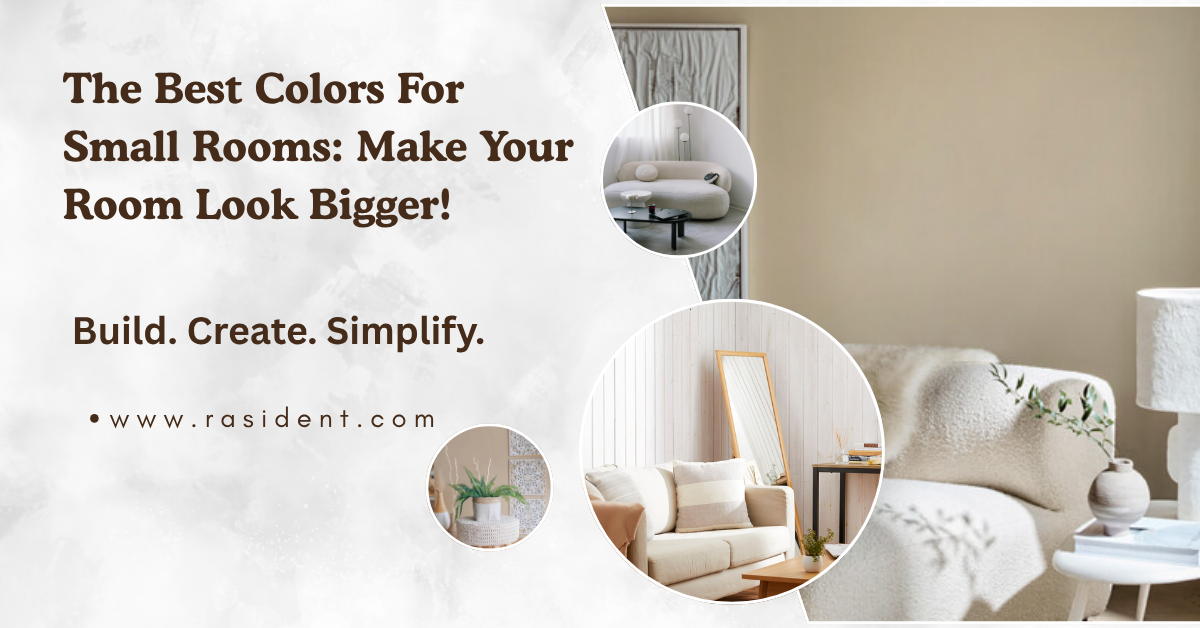
The Best Colors For Small Rooms! Choosing the perfect color for the walls is one of the best methods to change a tiny room. A judicious blend of colors can make a small room look bigger, brighter, and more welcoming. On the other hand, bad color selections can make a room feel small and boring.
This guide will show you the best colors to paint small areas, as well as helpful advice, popular ideas, and simple ways to make your space better.
Table of Contents
Why Does the Color of the Walls Matters in Small Rooms?
Color has a major effect on how we feel about space. Colors that are bright, light, and well-balanced can make a space look bigger. Colors that are dark or clash with each other can make a room look smaller.
The most important reasons to pick the right colors
- Makes rooms seem bigger
- Improves the light and makes it brighter.
- It makes you feel better and more at peace.
- Adds style and character
- Makes everything look fresh and fashionable.
How to Pick the Best Colors for Your Walls?
1.Sunlight Rooms
Sunlight Rooms that don’t get a lot of sun need bright colors to reflect light.
2. The shape and size of the room:
Putting colors in the right places can make rooms that are long or narrow look nicer.
3. Decorations and furniture:
Pick colors that go nicely with your other goods and furniture.
4. Your own manner:
Choose colors that make you cheerful and that you like.
The best colors for small space walls
Let’s talk about the most stylish and trendy colors that look nice in small rooms.
- White and light gray make things look clean and open.
- This is a relatively common mix for small spaces.
Why Does It Work?
- It bounces light around and makes the room look brighter.
- It gives it a sleek and fashionable look.
- Gives the place a light and airy atmosphere
How to Use It?
- Paint the walls white.
- Use light gray on walls or furniture that stand out.
- Beige and cream are colors that make a place feel cozy and welcoming.
- This mix is great for a calm and welcoming setting.
Good things:
- Adds warmth without making the room feel smaller.
- Looks nice with furniture made of wood.
- Brings calm to everything
Soft blue and white: fresh and calming
This mix is perfect for small bedrooms and living areas.
Why Pick This?
- It gives things a new and open feel.
- Makes the place feel calm
- Shows off natural light in a lovely way
Pastel colors that are soft and light
More and more individuals are utilizing pastel hues to make their homes look nice.
Some common pastel color pairs
- White with a touch of mint green
- Pink and gray blush
- Cream and lavender
Things that are good:
- It provides a little color without making the area too busy.
- Makes spaces feel soft and classy
White and light yellow: bright and happy
This combination is great for giving modest spaces a boost of energy.
Things that are good
- Makes nature shine brighter
- It makes the room feel warm and full of life.
- Works nicely in kitchens and places where you study.
Gray and White: Neat and Current
A timeless choice for modern spaces.
How Does It Work?
- Adds a touch of class
- Keeps things neat and tidy.
- Works with practically every kind of decoration
Navy Blue and White: Strong but Not Too Strong
This blend can make a great difference without making the space feel smaller.
Suggestions
- Make the walls navy blue.
- The other walls should stay white.
- Colors like green and neutral are peaceful and natural.
- Colors that come from nature are usually a good choice.
Best Mixes:
- Beige with olive green
- Light green and white
Pros:
- Gives the area a calm feeling
- Brings life and newness
- Color schemes that are simple and sophisticated and only use one color
- Using several shades of the same color can provide depth without making things look messy.
For example:
Gray in light, medium, and dark shades
How Does It Work?
- Keeps the design together
- Keeps things from looking too busy
- Two-tone walls are a clever way to give the impression that a room is bigger.
- The color of the walls can make a space look bigger or smaller.
Thoughts:
- The top is bright and the bottom is dark.
- Colors that are separated either up and down or side to side.
Pros:
- Adds more depth
- It makes the ceilings look taller.
The best colors to use in each room:
- Ideas for colors for a small living room
- Suggested Combinations
Beige and white
- A delicate blue with a subtle gray
- Cream and light green
Ideas for bedroom colors that are little
- Best Options
- Light blue and white
- Gray and lavender, tan and cream
Ideas for Colors in a Small Kitchen
- The Best Mixes
- White with light yellow
- Cream and mint green with gray and white
Ideas for Colors in Small Bathrooms
- Good Choices
- Light gray and white
- Light blue and white
- Beige and marble are two colors that go well together.
How to Use Color to Make Small Spaces Look Bigger
1. Choose light colors
Lighter colors reflect more light, which makes the area feel bigger.
2. Use only a few colors
If you want to keep the space tidy, don’t use too many colors.
3. Add walls with accents
Make the place more interesting without making it too busy.
4. Make sure the walls and furniture are the same color.
Use colors that are similar to make it look like one piece.
5. Use Finishes That Shine
They reflect light off of things and make them look brighter.
Things You Shouldn’t Do
1. Using Too Many Dark Colors:
Dark colors can make a space feel smaller.
2. Making color schemes too hard to understand:
Too many colors make things look messy.
3. Not paying attention to the light:
Different types of light make colors look different.
4. Picking bright colors for all the walls.
Use bright colors only as accents.
5. Not Trying Out Colors:
Always try out paint samples before you make a choice.
Color Ideas That Are Hot Right Now for Small Rooms (2026)
Things That Are Hot:
- Colors from the ground, like sage and terracotta
- Colors that are gentle
- Color schemes that are simple and don’t stand out
- Colors that come from nature
- Wall designs with two colors
Cheap Ideas for Colors
1. Painting by hand
Painting your own walls could help you save money.
2. Make accent walls
More effect with little paint.
3. Use decorations you already have
Make sure the colors match what you already have.
4. Pick paint brands that don’t cost a lot.
Find nice paint that fits your budget.
Questions and Answers
1. What colors make a space look bigger?
Light hues like white, beige, light gray, and soft pastels make a tiny room look bigger because they bounce light around.
2. Is it okay to employ dark hues in small spaces?
Yes, but only in little amounts or as accent walls. Dark colors can make a space seem smaller.
3. What two colors go well together in small rooms?
White and light gray, beige and cream, or soft blue and white are some of the greatest color combinations for tiny rooms.
4. Do the ceilings need to be a different color than the walls?
Yes, ceilings that are lighter make the room look bigger and more open.
5. How many colors should I put in a small space?
To make the area look clean, balanced, and nice, it’s recommended to use only two or three colors.
Conclusion:
Picking the right colors for the walls in a tiny room may make a great difference in how it looks. Small spaces may look bigger, brighter, and more welcoming with light colors, simple color schemes, and sensible color combinations.
It doesn’t matter if you like soft pastels, bright hues, or neutral colors. The most important thing is to keep the design clean and balanced. Even a small room may seem and feel big and beautiful with the correct colors.







Leave a Reply