


How to Safely Store Kerosene at Home! I can still clearly recall the first time my father brought a big can of kerosene home. He had enough fuel on hand to get us through the chilly winter months, but the heater was running low. He stored it in a particular corner of the garage, away from the house; it was always the same location and the same red container.
One of those items that most households take for granted is kerosene. Without giving it any attention, you purchase it, utilize it, and store what’s left. However, incorrect kerosene storage can result in explosions, fires, and health issues.
Table of Contents
What Is Kerosene and Why Does It Require Special Storage?
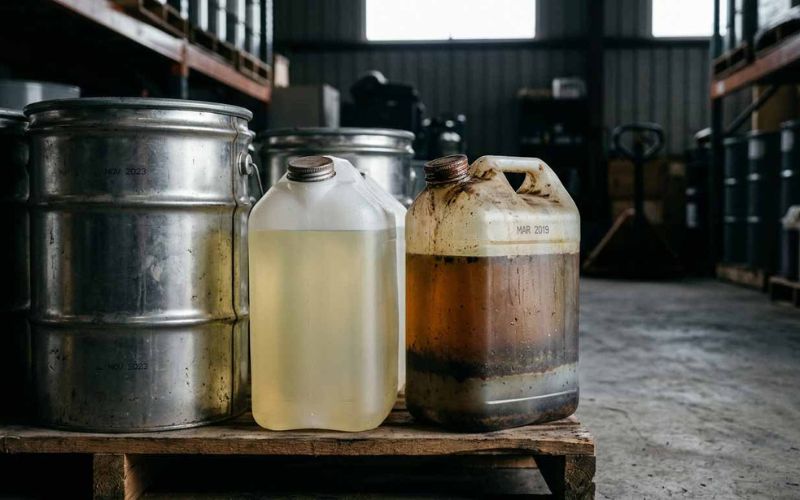
For many years, households have utilized kerosene, a flammable liquid fuel. It is frequently utilized in stoves, kerosene lamps, space heaters, and as a backup fuel during winter or blackouts.
The fact that kerosene is flammable, not explosive like gasoline, but nonetheless capable of catching fire under the correct circumstances makes it difficult to store. Additionally, it releases vapors that might be dangerous to breathe in a confined area.
Additionally, badly maintained kerosene can deteriorate over time, losing its effectiveness and perhaps harming your burner or heater.
Therefore, it’s true that kerosene storage is far more important than most people think.
Step 1: Use the Correct Container at All Times
This is the fundamental and unchangeable guideline regarding the storage of kerosene.
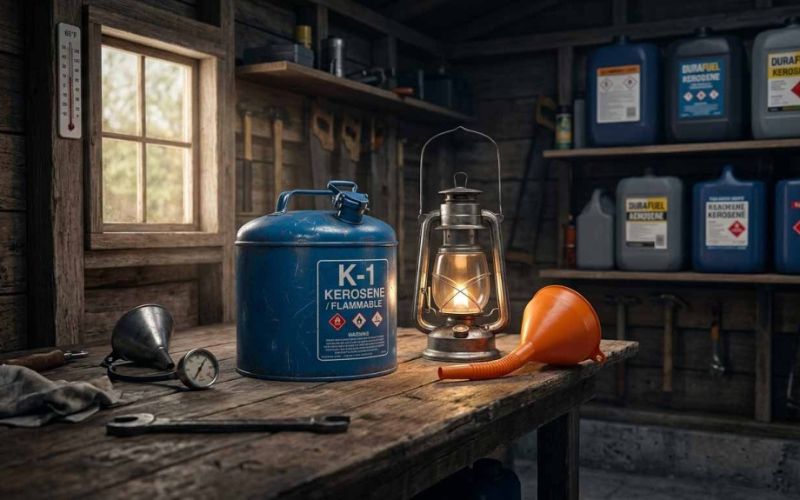
Use only kerosene containers that have been approved. These are usually blue in color; kerosene is distinguished from other fuels using a recognized color labeling system:
- Gasoline is represented by red containers.
- Diesel is represented by yellow containers.
- Kerosene in blue canisters
Kerosene should never be kept in a container that was once used for gasoline or any other chemical. It can be hazardous if there are even minute amounts of gasoline combined with kerosene.
Seek out containers that adhere to UN or ASTM safety regulations or are expressly marked as approved for flammable liquids. These containers are composed of materials that don’t react with gasoline and don’t corrode.
Additionally, always ensure that the cap or lid is securely shut. Fumes can escape from a loose cap, posing a fire and health risk.
Step 2: Put It in the Correct Place
The location of kerosene storage is equally as crucial as the container.
Keep It Away from the Main Living Area
The ideal location for storing kerosene is outside your house, in an outbuilding, shed, or garage that is distinct from your living area. This lowers the possibility of a fire spreading inside your home and keeps dangerous vapors away from your family.
- Keep It Away from Sources of Heat
- Never store kerosene next to:
- Boilers or furnaces
- Heaters for water
- Ovens or stoves
- Fireplaces
- Heaters in space
- Sunlight coming in through windows
Despite having a higher flash point than gasoline, kerosene can still become dangerous when exposed to heat for an extended period of time. Store it in a dry, cool location with consistent temperatures.
Keep It Away from Electrical Devices
Kerosene vapors can be ignited by sparks from electrical outlets, motors, or switches.
Don’t keep kerosene close to:
- Panels of electricity
- Dryers or washing machines
- Power instruments
- Any apparatus that ignites
- Put it on the floor rather than the shelves.
Instead of being stored on tall shelves, kerosene containers should be placed on the ground. A container may shatter or leak if it falls from a height, and fuel that has spilled close to an ignition source poses a major risk.
Step 3: Verify the Storage Area’s Ventilation
Because kerosene fumes are heavier than air, they sink and can build up close to the ground. These vapors can build up to hazardous amounts in an enclosed area without airflow, which can result in headaches, nausea, and dizziness, or in severe situations, ignite.
Kerosene should always be kept in an area with adequate ventilation. If there are no windows in your shed or garage, you might want to construct a vent close to the floor to let vapors out.
Kerosene should never be kept in a completely closed space with no ventilation.
Step 4: Keep Kids and Pets Away
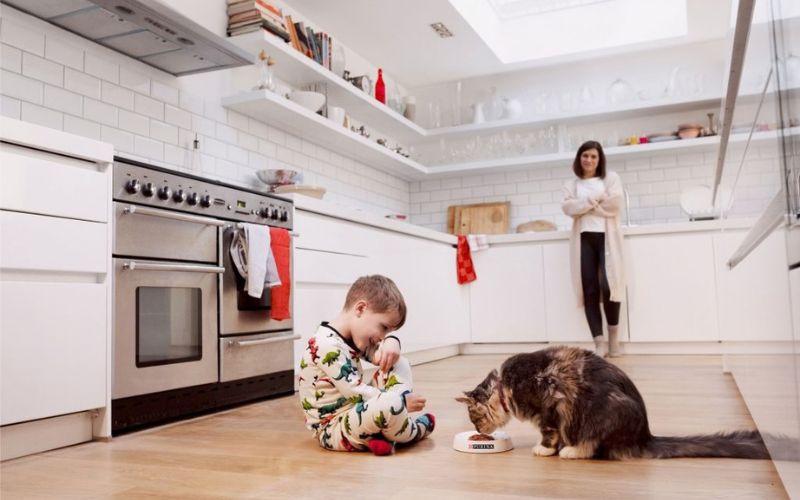
This should go without saying, but it is important to make it clear: kerosene is hazardous if inhaled in significant quantities and toxic if eaten.
A toddler may find a brightly colored container on the garage floor intriguing since children are inherently curious. Verify that your storage space is:
- has a childproof latch or is locked
- Not suitable for pets or little children
- If at all possible, clearly marked with a warning sign
Don’t make a youngster throw up if they inadvertently consume kerosene. Get medical help and contact poison control right away.
Step 5: Avoid Keeping Big Amounts
Purchasing and storing far more kerosene than one actually needs is one of the most frequent blunders people make.
For personal use, it is generally advised to keep no more than five gallons (about 19 liters) of kerosene at home. It is usually important to check your local rules, since certain municipal fire codes may permit more.
There is a greater probability of an accident, more fumes, and a larger potential fire when fuel is stored in huge quantities. Instead of stockpiling big quantities, buy what you need for the season, consume it, and then replenish as needed.
Step 6: Clearly Label Everything
Labeling becomes crucial if you have several fuel canisters in your shed or garage.
A kerosene heater or stove may sustain damage, malfunction, or even catch fire if the incorrect fuel is accidentally used. Your kerosene canister should always be clearly labeled with:
- “KEROSENE” in big, bold letters
- The date of purchase or fulfillment
- If the container doesn’t already have one, a flammable warning
This is particularly crucial if the fuel storage location may be accessed by other members of your household, such as spouses or kids.
Step 7: Determine the Duration of Kerosene
Many individuals are unaware that kerosene has a shelf life.
Kerosene can be kept for two to five years in a cold, dry place in a sealed, certified container. But it can deteriorate with time, particularly if it’s exposed to contaminants, moisture, or air.
Can of degraded kerosene:
- When burned, produce more smoke and soot.
- Block the burner or wick in your heater.
- It smells worse than fresh kerosene.
- be less effective as a fuel
How to Determine Whether Kerosene Is Bad?
The color of fresh kerosene is usually clear or very faintly blue, and it smells clean and pleasant. The following symptoms could indicate that your kerosene has gone bad:
- Its color has changed to either yellow or dark.
- It smells strongly of something unpleasant or sour.
- There is silt or cloudiness visible in the container.
- When burned, it produces more residue than usual.
Don’t use your kerosene in your stove or heater if it exhibits any of these symptoms. Instead, dispose of it appropriately.
Step 8: Get Rid of Old Kerosene Correctly
When it comes to disposal, never put outdated or deteriorated kerosene on the ground, in the toilet, or down the drain. It can contaminate groundwater and pose a threat to the environment.
Here’s how to properly get rid of kerosene:
Make contact with the hazardous waste disposal facility in your area. There are approved drop-off locations for household chemicals and flammable liquids in most cities.
Give the local fire department a call. They may frequently give you advice on appropriate disposal practices in your community.
Consult recycling facilities or vehicle parts stores. Used or outdated fuel is accepted for recycling at some of these facilities.
Never dispose of old kerosene by burning it outside; this is risky and prohibited in many areas.
Step 9: Keep a fire extinguisher close at hand
A fire extinguisher should be easily accessible wherever you have kerosene.
A Class B fire extinguisher is required for flammable liquid fires, such as those caused by kerosene. Water can spread the burning fuel and exacerbate a kerosene fire, so avoid using it.
Ensure that everyone in your home is aware of:
- The location of the fire extinguisher
- How to use the PASS method (pull, aim, squeeze, sweep)
- Avoid using water on gasoline fires.
Additionally, if your storage facility is connected to your house, place a carbon monoxide and smoke detector close by.
Step 10: Consistently Look for Leaks
During the season when you are using it, make it a practice to check your kerosene container at least once a month.
Search for:
- Damage or fractures in the container
- Wet areas or fuel marks surrounding the container
- Even with the lid closed, the storage compartment has a strong kerosene odor.
- Metal canisters with rust
If you see any of these indicators, move the kerosene right away to a new, authorized container and carefully dispose of the damaged one.
Extra Advice for Safe Kerosene Use at Home:
Safe kerosene storage is only one aspect of the problem.
Here are some additional pointers for making safe use of it:
Use the Correct Grade of Kerosene at All Times:
The purest and cleanest type of kerosene available for domestic usage, 1-K grade, is used in the majority of home heaters and appliances. A lesser grade can increase indoor air pollution, cause damage to your appliance, and produce more soot.
Avoid refueling a hot appliance:
Prior to refueling, always allow your kerosene heater or lamp to cool fully. A heated appliance may ignite right away if gasoline is poured into it.
Never Use Kerosene in Place of Other Fuels:
Only appliances made especially for it should utilize kerosene. It should never be used in place of gasoline, lighter fluid, or any other fuel.
Have a funnel on hand:
Always use a funnel to prevent spills when transferring kerosene from a large container into your appliance or a smaller container. Even tiny spills on the floor might pose a fire and slide hazard.
After handling, wash your hands:
Your skin and eyes may become irritated by kerosene. After touching the container or filling your appliance, always thoroughly wash your hands with soap and water.
A Brief Overview: Kerosene Storage Dos and Don’ts DO DON’T
- Make use of authorized blue containers
- Keep in arbitrary plastic bottles.
- Keep in a dry, cold, and well-ventilated space.
- Keep close to sunlight or heat sources.
- Clearly label containers
- Combine with additional fuels
- Stay away from kids and animals.
- Keep a lot of stuff that isn’t needed.
- Regularly check containers for leakage.
- Empty used kerosene down the drain.
- Keep a Class B fire extinguisher close at hand.
- Put water on a fire caused by kerosene.
- Make use of 1-K grade kerosene.
- Fill up a heated appliance
Conclusion:
When handled and stored carefully, kerosene may be a reliable and practical fuel. This guide’s instructions are not costly or difficult to follow. All you actually need to keep your family and house safe is an appropriate container, a secure storage area, adequate ventilation, and routine inspections.
None of these rules had technical names that my father was aware of. He simply recognized that combustible objects should be treated with respect based on his expertise and common sense. The best advice anyone can still give is that.














Leave a Reply